Roof vent repairs
Review damaged caps, loose components, vent bases and surrounding roofing. Where replacement is appropriate, match the vent and flashing detail to the covering and roof slope.

12233 92 Avenue, Surrey, British Columbia V3V 7R9, Canada
CALL US TODAY · 604-358-3436
Roof vent repair & installation
It can help when airflow is restricted. The cause of the moisture still needs checking.
Roof ventilation uses intake and exhaust openings to move outdoor air through a vented attic. Blocked openings, damaged vents, roof leaks and indoor moisture can need different repairs. Paragon Roofing BC assesses roofing and vent details in Vancouver, then confirms the appropriate repair or installation scope. Adding vents alone is not a guaranteed cure for condensation.
Find the cause before choosing the fix
Tell us when you first noticed the problem, whether it follows rain or cold weather, and which rooms are affected. Photographs and earlier repair records help make the assessment more useful.
| What you notice | What it may indicate | What to investigate |
|---|---|---|
| Water appears during rain | A damaged vent, flashing or adjacent roof covering may be allowing water in. | Where the water enters, the condition of the vent base and surrounding roofing. |
| Frost, droplets or widespread dampness | Condensation may be involved; a stain alone does not prove inadequate ventilation. | The pattern and timing, air leakage, exhaust discharge and accessible airflow paths. |
| Staining, musty odours or damp insulation | These are reasons to investigate moisture, rather than identify a single cause from a photograph. | Whether moisture is active, what is accessible and whether another specialist is needed. |
| Missing, cracked or loose vent parts | The vent may need repair or replacement even if the attic is otherwise dry. | Product compatibility, attachment, weather protection and the roof beneath it. |
Share photos taken from a safe, accessible place. Roof access and moving through an unfinished attic should be left to people equipped for the work.
For an active leak, see our Vancouver roof repair service. If water is around a roof window, our skylight repair page explains that separate scope.
Roofing work with a defined scope
We start with the existing roof and the concern you report. A vent replacement, a new ventilation layout and a wider moisture investigation are different jobs. The proposal should identify which one your property needs.
Review damaged caps, loose components, vent bases and surrounding roofing. Where replacement is appropriate, match the vent and flashing detail to the covering and roof slope.
Plan the intake and exhaust together before making new openings. Select compatible products, positions and net free vent area for the actual roof and attic layout.
Review accessible soffit intake, roof or ridge vents and possible blockages. Confirm whether attic access, insulation work or another trade is needed before agreeing the scope.
It is the usable open area through a vent, usually shown in the product information. Counting vent covers alone does not establish ventilation capacity. The attic size, intake, exhaust and clear passage through the assembly all matter.
Vancouver’s coastal conditions
A cold roof surface can collect condensation even when vents are present. Coastal attic research found moisture problems in monitored homes with adequate vent openings and reasonably airtight ceilings. In those particular attics, increasing ventilation was not a complete solution.
That does not mean ventilation or air sealing is unnecessary. It means the repair should address the actual building, moisture sources and drying conditions.
Keep a record of when moisture appears and any changes after repairs. Persistent dampness may need a broader review of the ceiling air barrier, insulation, indoor humidity and roof assembly.
We confirm the roofing work we can undertake. Specialist building envelope investigation, insulation work or mould assessment may need a separate scope and qualified trade.
From Paragon project records
These Paragon projects show different vent forms on shingle roofs. They illustrate visible roof details; a photograph cannot verify the concealed intake, duct connections or overall ventilation performance.
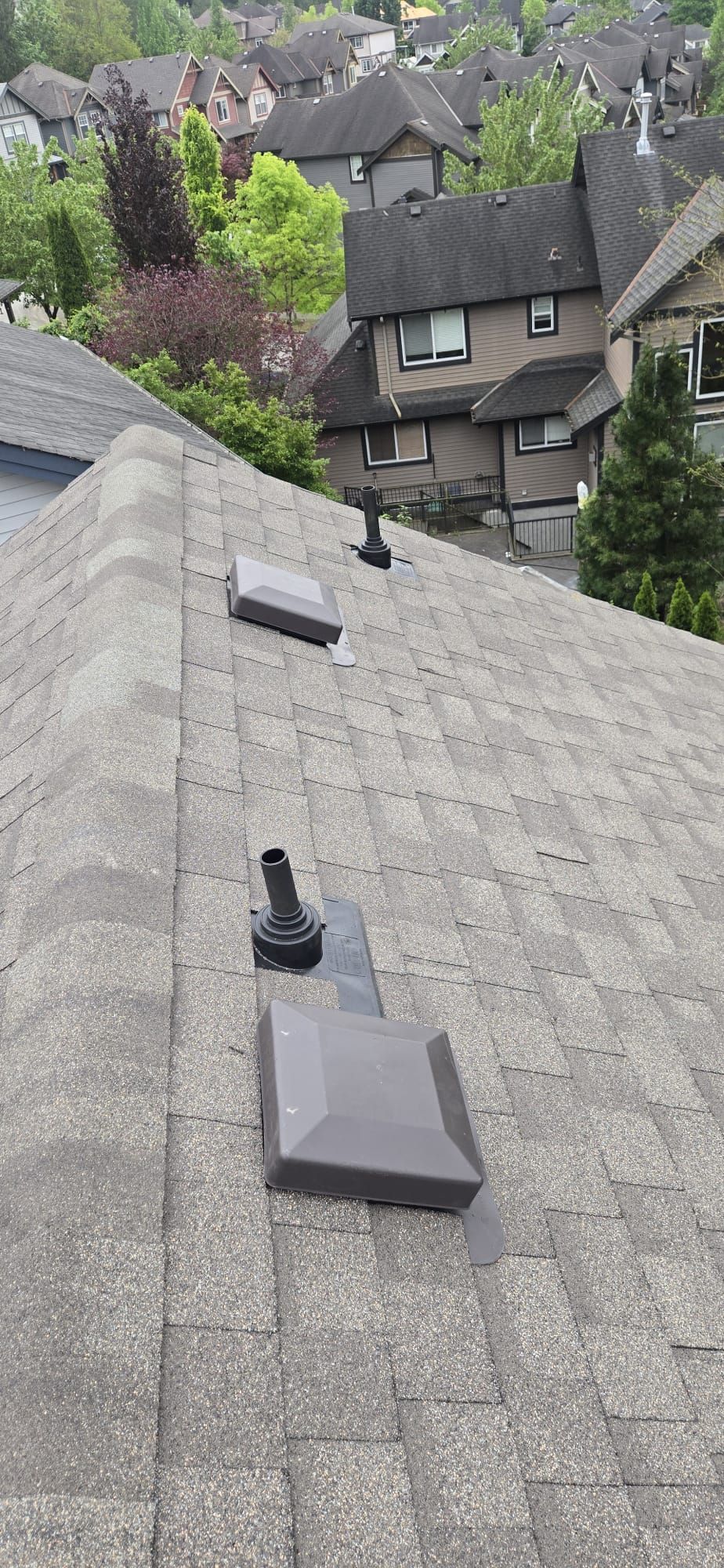
229 Street, Maple Ridge. The low rectangular roof vents and the upright plumbing vent pipes serve different purposes.
View the Maple Ridge project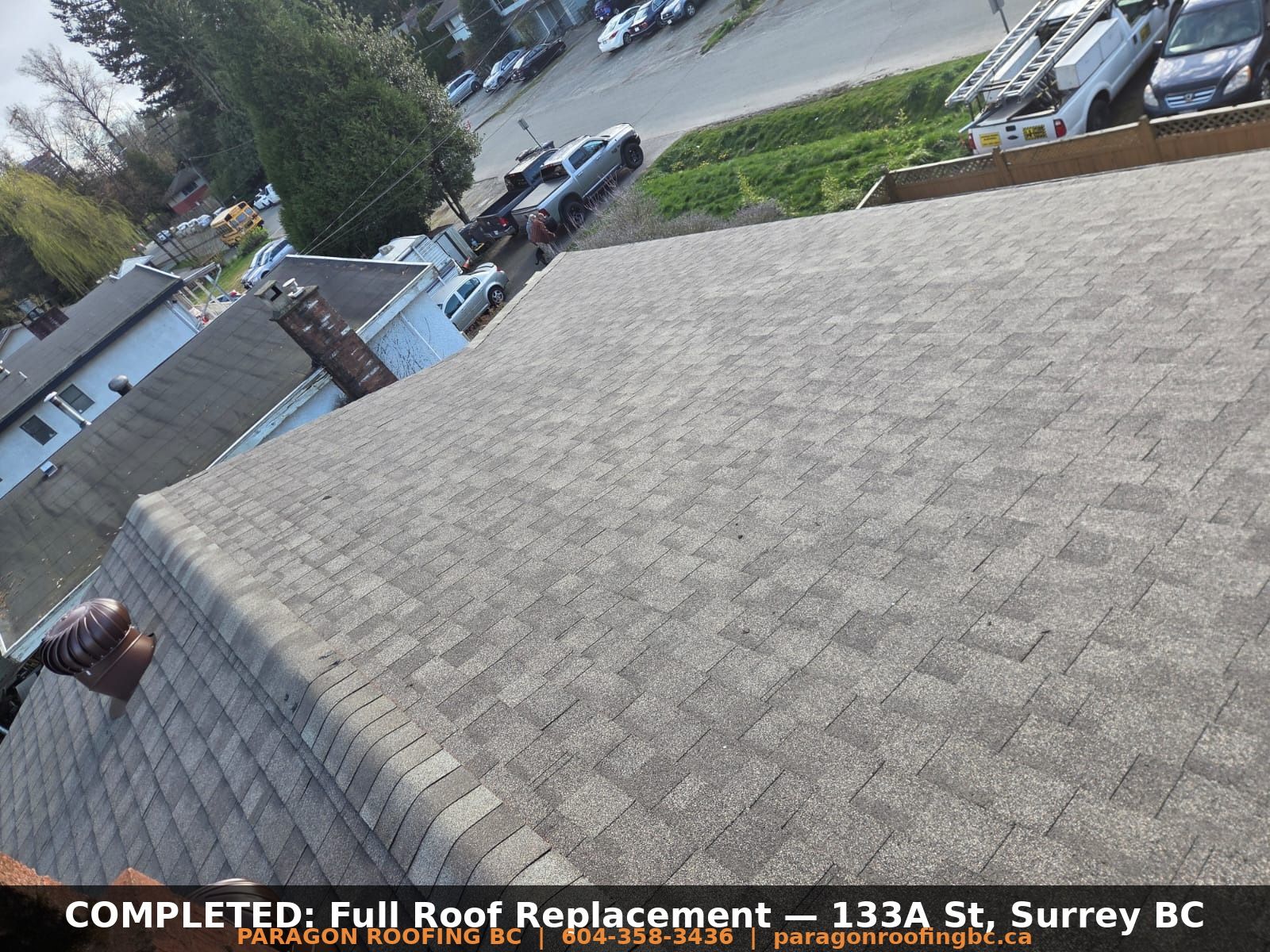
133A Street, Surrey. The rotating vent is one form of roof exhaust. Product choice still depends on the intake and roof layout.
View the Surrey projectTell us what you have noticed
Include the Vancouver address, roof material, signs of moisture or vent damage, and whether attic access is available. We will discuss the next step and confirm the assessment scope, any fee and scheduling before arranging work.
Different vents do different jobs
Soffit or other designed intake openings admit air to a vented roof space. Roof or ridge vents provide exhaust. The layout should function as a system; mixing exhaust types can disrupt the intended airflow.
An electric attic fan is not our default answer to a damp attic. It can draw air from the house when intake is inadequate. Review the cause and the assembly before considering powered equipment.
A bathroom fan needs a connected duct that discharges outdoors. Letting moist exhaust air into the attic does not become acceptable because the roof has vents. The duct, exterior termination and connection need checking together.
Roof cap and flashing work is distinct from replacing a fan motor, wiring or redesigning ductwork. Any mechanical or electrical work must be separately confirmed with the appropriate trade.
An upright pipe connected to the plumbing system has a different purpose from a box or ridge vent serving the roof space. Tell us which component is damaged; if you are unsure, a clear photograph can help identify the next assessment step.
Match the details to the roof
Review vent bases, underlayment, shingle integration and the proposed intake/exhaust layout. Vent changes can be included in a defined reroofing scope.
Assess the existing roof build up and repair compatibility. Do not assume the detail used for a shingle roof is suitable for a cedar assembly.
Match vent details to the panel or shingle system, roof shape and flashing requirements. Condensation needs an assembly review, not simply another roof opening.
For a roof without an accessible attic, such as some cathedral ceilings and low slope assemblies, the approach may be different. Establish how the roof was designed before adding vents. Explore our Vancouver residential roofing services when ventilation is part of a larger roof project.
Compare the work, not a vent count
A single accessible vent replacement is different from changing intake openings, repairing deck damage or reworking several roof areas. We confirm pricing after the roof, access and proposed scope are understood.
For a shared building, identify who can arrange access and approve work. Our Vancouver strata roofing page explains the wider planning context. Keep repair photos and observations with your roof maintenance records.
Clear answers before booking
Blocked intake, damaged vents and signs of persistent moisture justify an assessment. Frost, staining, odours and damp insulation are clues, not a diagnosis. The roof, accessible airflow paths and possible moisture sources should be reviewed together.
No such guarantee is appropriate. More openings will not correct every moisture source or roof assembly problem. Persistent dampness or suspected mould may require a separate building envelope or remediation assessment.
There is no universal best vent. Roof shape, available ridge, intake openings, attic configuration and product requirements affect the choice. Ask for a coordinated layout rather than selecting a vent from its appearance alone.
Do not assume that mixing exhaust types above the same attic will improve airflow. The proposed system and manufacturer’s instructions should determine which vents stay, which are removed and how intake is provided.
No. Bathroom exhaust should discharge outdoors through an appropriate connected duct and exterior termination. Repairing the roof cap alone may not address a disconnected or unsuitable duct.
The price depends on the vent, access, roofing material and any surrounding damage. Ask for a written scope identifying the replacement, flashing work, allowances and exclusions. Confirm any assessment fee before booking.
A local repair or vent replacement may be possible when the surrounding roof is serviceable. The assessment should establish the condition and compatibility of the materials. Widespread deterioration may justify a broader roofing discussion.
The usual soffit-to-roof-vent arrangement may not apply. The existing assembly needs assessment before new openings are made. A suitable alternative intake detail or a different roof assembly approach must be established for the property.
Paragon Roofing BC
Our own roofing crews carry out the agreed work, with owner involvement and a written scope. Tell us whether you have a leaking vent, visible damage, recurring attic moisture or a planned reroof.
Use the form below, contact our team or call 604-358-3436 to discuss your Vancouver property.
Vancouver roofing
997 Seymour St, Suite 250
Vancouver, BC V6B 3M1
 View our BBB business profile
997 Seymour St Suite 250, Vancouver,
BC V6B 3M1, Canada
Email: contact@paragonroofingbc.ca
Mon - Sun: 6AM-6PM