Paragon Roofing BC
Chimney repair and installation in Vancouver
A leak beside a chimney, crumbling mortar or a planned roof project deserves a closer look at how the chimney and roof work together. Paragon Roofing BC is your starting point for chimney repair, rebuilding and installation enquiries in Vancouver, with attention to the exterior details and the roofing around them.
You do not need to diagnose the problem before contacting us. Tell us what has changed, whether the chimney is in use and what you want to achieve. From there, the next step is to establish the work needed and any specialist involvement.
Paragon Roofing BC is backed by a team with over 20 years of roofing experience.
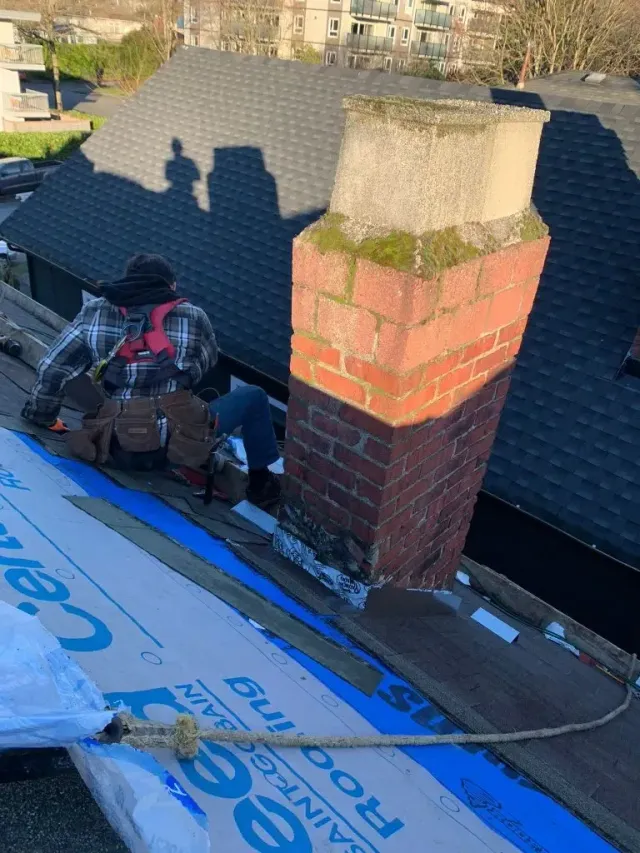
Find the source of a chimney leak
Water showing near a chimney does not always enter at the same place. The roof junction, masonry, top protection and neighbouring roof surfaces each need to be considered. A stain indoors is a useful clue, but it does not establish which component has failed.
An assessment should connect what you have noticed with the condition outside. Loose metal at the roof junction calls for a different repair from deteriorated mortar or damaged protection at the chimney top. Covering one visible gap may leave another water route unresolved.
| What you notice | What needs a closer look |
|---|---|
| Water after rain near the chimney | Flashing, the masonry top and surrounding roof surfaces |
| Mortar falling out of joints | The condition and extent of the affected joints and adjacent brick |
| Flaking, cracked or loose brick | Whether damage is localized or part of wider deterioration |
| A missing or damaged top cover | Which component is affected and what the chimney serves |
| Repeated repairs in the same area | The underlying junction and any concealed condition the earlier work did not address |
Flashing and counterflashing at the roof junction
Flashing manages water where the roof meets the chimney. On a shingle roof, step flashing works with the shingle courses along the sides. Counterflashing protects the upper edge of the lower flashing at the chimney. These parts have related jobs, but they are not interchangeable.
A useful repair considers how those pieces meet the masonry and surrounding roof covering. If an area needs to be opened, the condition beneath it can affect the work. Replacing a visible metal edge without considering the adjoining layers can leave the underlying problem unresolved.
Our Vancouver chimney repair and installation guide provides further planning context for chimney and roof junction work.
Masonry crowns and rain caps do different jobs
A masonry crown is the protective top surface around the flue opening. A rain cap sits over the opening and helps limit rain and debris entering it. Depending on its design, a suitable cap can also restrict animal entry. A chimney enclosure may have a metal chase cover instead. The cover needs to suit that particular system.
These components should be assessed separately. A new rain cap does not repair failed flashing at the roof, and repairing the crown does not establish the condition of the flue inside. The right replacement depends on the existing chimney and what it serves.
Match the repair to the chimney’s condition
Chimneys can show several types of deterioration at once. The aim is to identify the affected materials and how far the problem extends, so a small repair is used where it fits and a larger issue receives the attention it needs.
Mortar joints and repointing
Repointing renews deteriorated mortar in masonry joints. It addresses the joints rather than replacing the brick itself. The existing masonry and the compatibility of the replacement mortar matter, especially where older brick is being retained.
Missing mortar in a limited area is a different starting point from loose masonry or movement through a larger part of the chimney. If the surrounding brick or structure is affected, simply filling the visible joints may not address the whole condition.
Damaged brick and exterior finishes
Flaking or crumbling at the face of a brick is often described as spalling. Its extent matters: replacing a small number of damaged units is different from dealing with widespread deterioration. Visible cracks, loose material and displaced sections need assessment before the repair approach is settled.
Brick, concrete block, stucco and framed chimney enclosures also have different exterior details. A surface finish can hide the material beneath it. Repair planning should establish what is present rather than assuming that a fresh outer coating addresses every underlying defect.
Coordinate chimney work with the surrounding roof
The condition of the roof around the chimney affects how a repair is approached. Access to the junction, adjoining shingles or other roof material, and any area that must be opened all influence the work. The project should also account for protecting an exposed area and restoring the surrounding covering.
Where damage extends beyond the chimney junction, our Vancouver roof repair service is the relevant next step for the adjoining roofing. If you are planning a new roof installation, raise the chimney details early so they can be considered with the rest of the roof.
For shared buildings, access arrangements, resident communication and the relationship to wider roof work also matter. Our Vancouver strata roofing services provide the appropriate starting point for that broader building context.
What affects chimney repair costs and planning
Two chimneys that look similar from the ground can require different work. The estimate depends on the component needing repair, the extent of deterioration and what is needed to reach and restore it.
Access can be a significant part of planning. Building height, roof slope, the chimney’s position and space around the property affect how the work can be approached. The roofing material and how much of it must be disturbed also matter. A localized flashing repair has a different extent from rebuilding masonry and restoring a larger roof area.
Material matching, removal of damaged components, disposal and work revealed after an area is opened can also affect the estimate. If the project changes the structure or an appliance connection, the responsibilities and specialist work should be identified before pricing is treated as complete.
A useful written estimate describes the intended repair, surrounding roofing work, access arrangements and any exclusions. It should make clear how additional findings will be handled. Any warranty should be explained through the written terms that apply to the actual work and materials, rather than a general promise about every chimney.
Keep a record of changes between visits
Noticing changes early helps you give a clearer account of the problem. Keep photographs of staining or visible exterior deterioration taken from a safe location, and note when water appears. Save records of earlier roof and chimney work so the next assessment can consider what has already been tried.
Include the chimney junction when discussing roof maintenance in Vancouver. Exterior roof maintenance and the inspection or servicing of an appliance and its flue are different tasks. A working fireplace or appliance needs the appropriate specialist attention for that system.
Real projects and the details around the roof
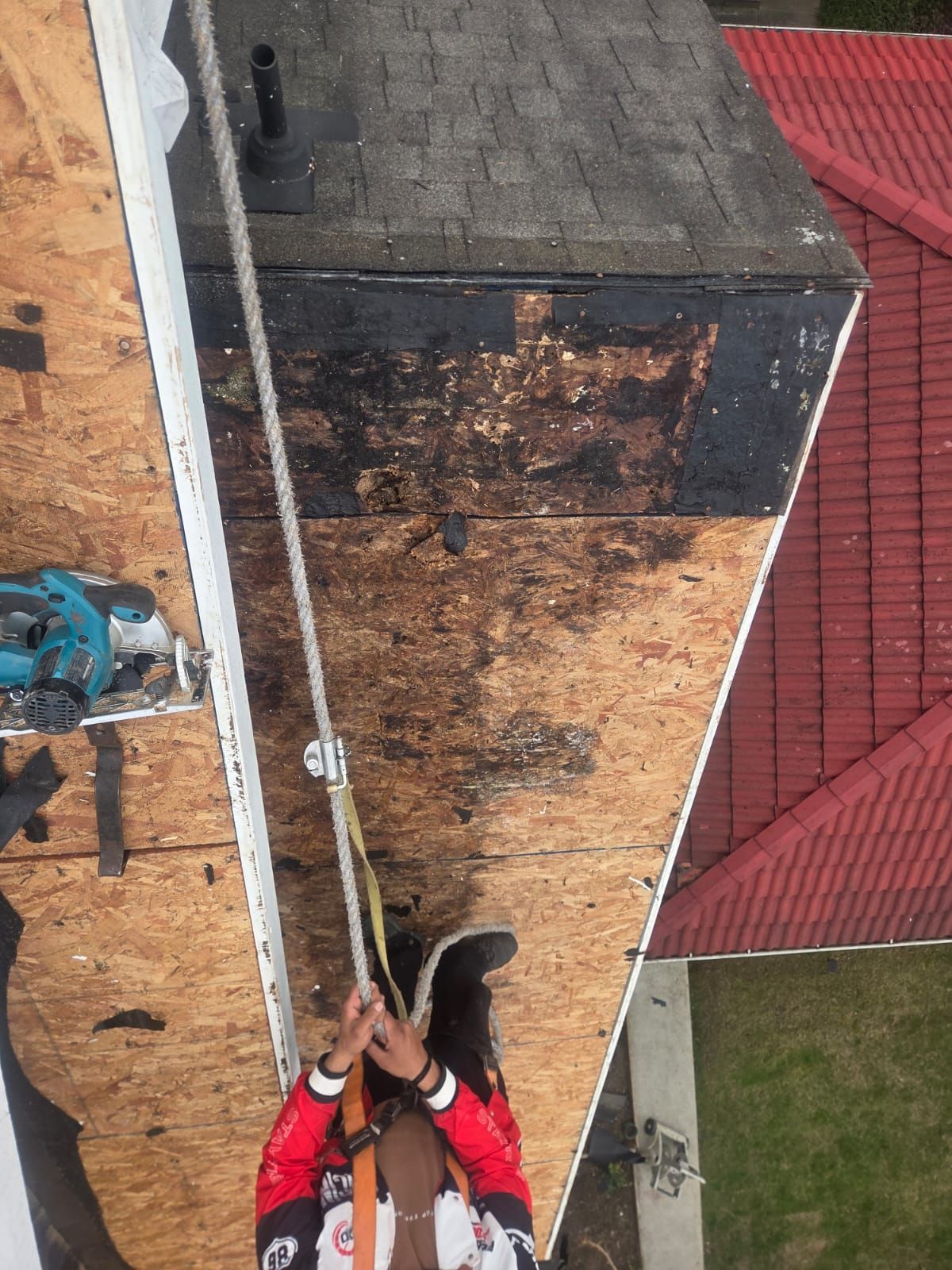
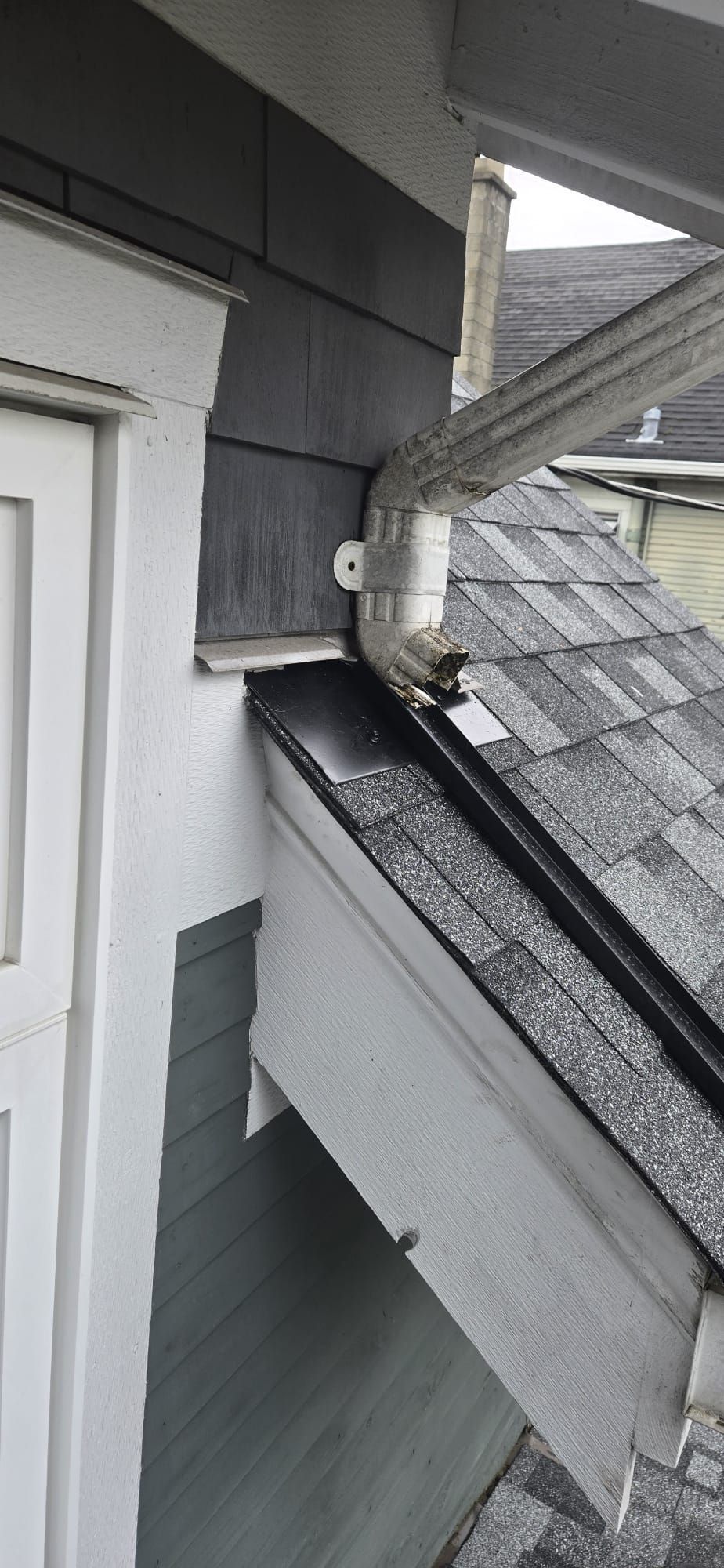
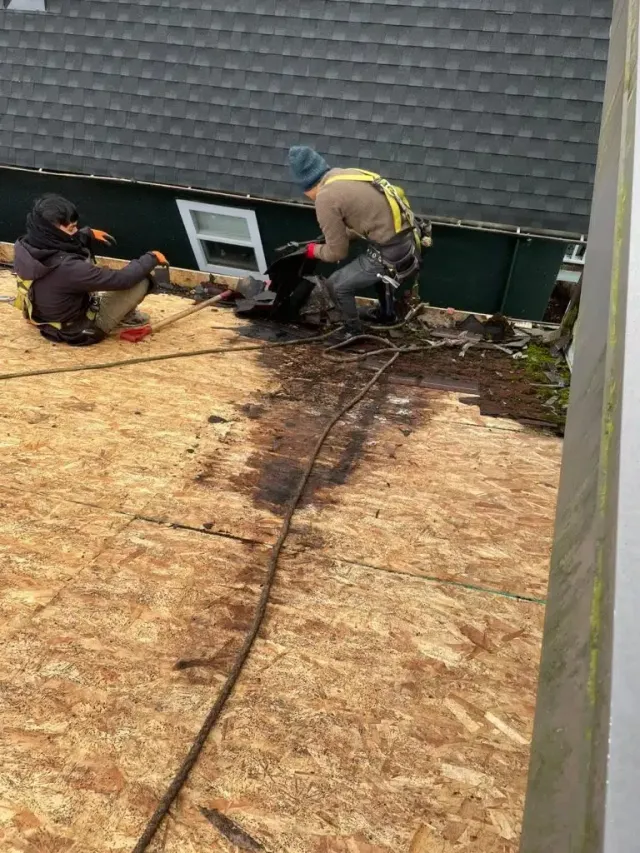
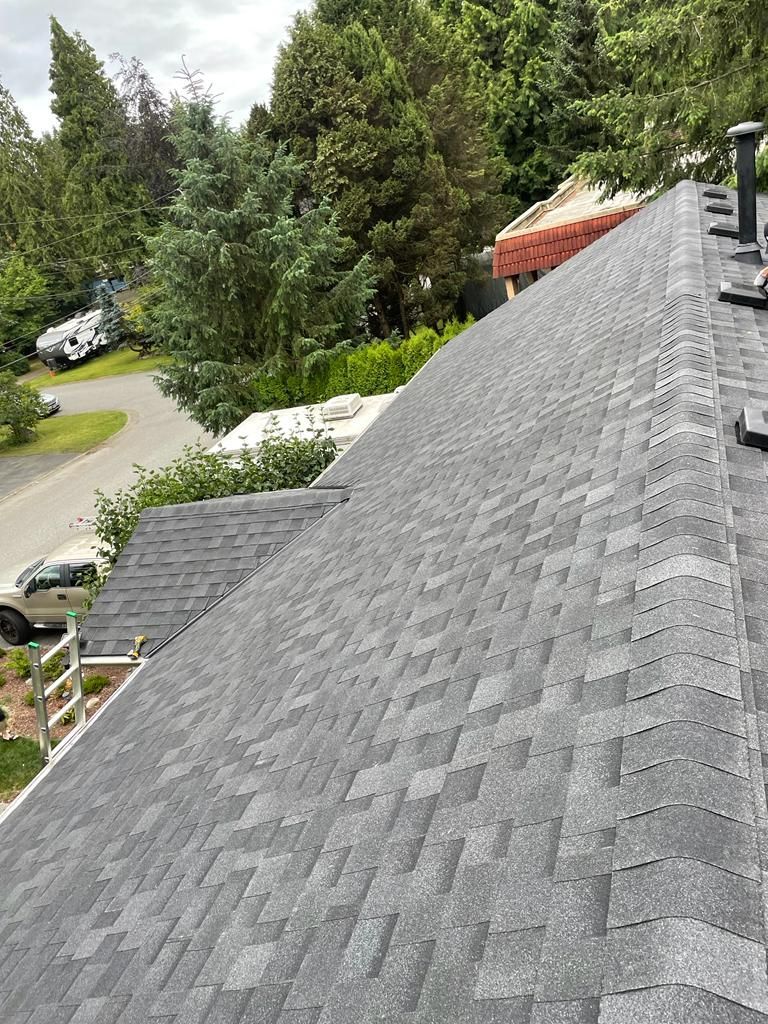
Chimneys sit within a larger roof assembly. Our project photographs show roof work, surrounding penetrations and other water junctions, helping you see the kinds of details that need coordination.
Questions about chimney repairs and installation
What can cause a leak around a chimney?
Possible areas include the flashing at the roof junction, the masonry and its top protection, or surrounding roofing. More than one component can be involved. The pattern of a leak helps an assessment, but an indoor stain alone does not establish the entry point. The repair should address the identified condition rather than assume that every chimney leak has the same cause.
Do flashing, crowns and rain caps solve the same problem?
They have different roles. Flashing manages the roof junction, a masonry crown protects the top of the masonry, and a suitable rain cap helps protect the flue opening. Tell us which part appears damaged if you know, but there is no need to identify the component yourself before contacting us.
Can an old brick chimney be repaired instead of rebuilt?
That depends on the condition and extent of the deterioration. Limited joint or component repairs may be appropriate where surrounding material can remain. Loose, displaced or more extensively deteriorated masonry needs a broader assessment. Whether the chimney is still in use also matters when considering rebuilding or removal.
What should a chimney assessment cover?
For exterior repair planning, relevant areas include visible masonry, mortar joints, top protection, flashing and the adjoining roof. Access and concealed conditions can limit what is established initially. An exterior roofing assessment does not automatically include an inspection of the appliance, internal flue or liner. Make clear what the chimney serves so any specialist assessment can be identified.
Talk to Paragon about your chimney project
Whether you have a recurring leak, deteriorating masonry or plans for a new chimney, start with the condition you can see and the outcome you want. Include any planned roof work and tell us whether the chimney is active.
Use the enquiry form to describe the issue or the project you are planning. Useful details include where water appears, whether it follows rainfall, any visible changes to the brick or mortar, and whether roofing work is also being considered.
If you already have photographs taken from a safe location, mention them when you contact us. Details about access, building height and the chimney’s current use also help prepare the conversation. You do not need to climb onto the roof or open anything up before getting in touch.
Contact Paragon Roofing BC or use the enquiry form below to discuss the next step for your Vancouver property.
