
SURREY COMMERCIAL ROOFING
Commercial roof repair and maintenance in Surrey
Find the source. Define the repair. Keep a useful roof record.
Paragon Roofing BC helps owners and property managers investigate commercial roof leaks, repair membrane and flashing defects, and plan maintenance for existing roofs. Start with an assessment of the roof system, drainage and the building’s needs.
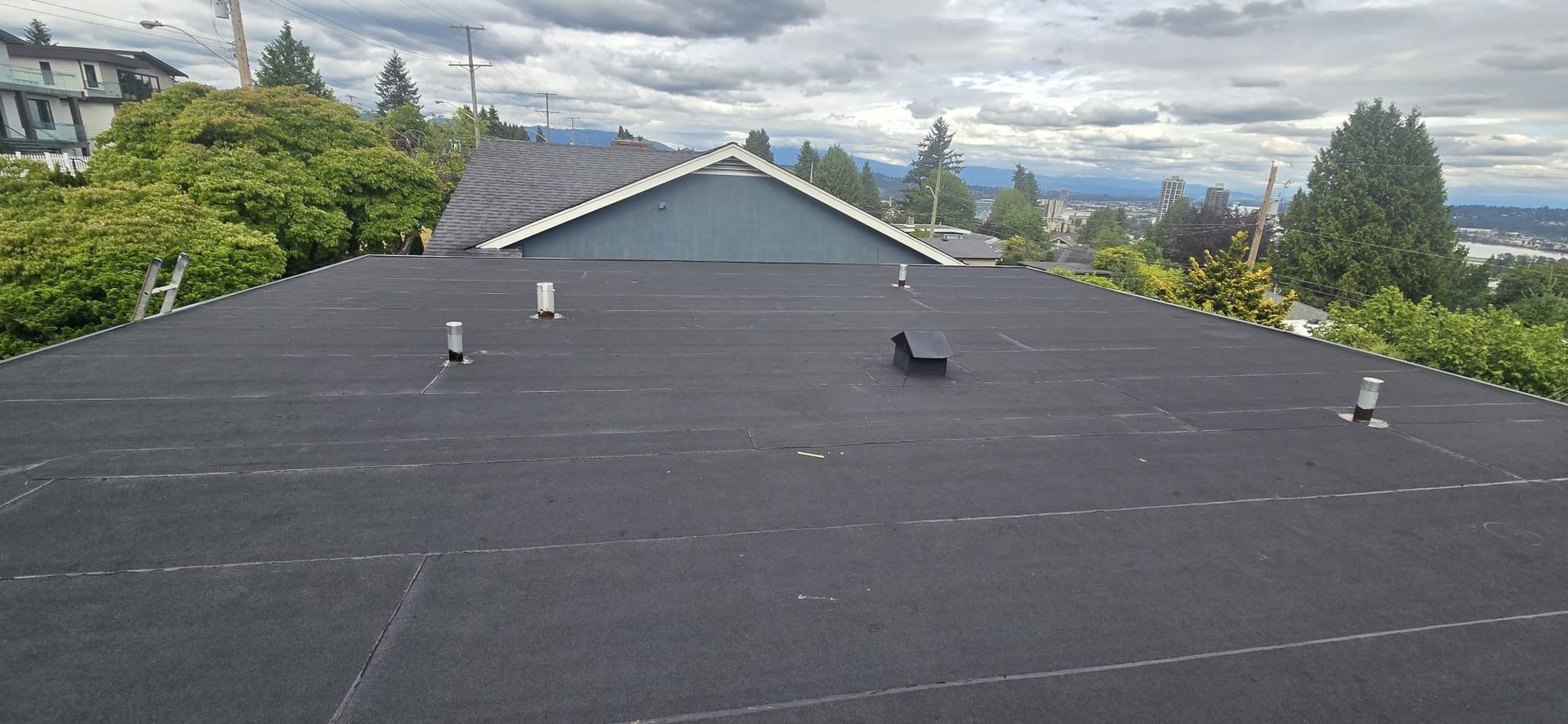
WHEN WATER IS GETTING IN
Start with the leak and the occupied building
Tell us what has changed
Give us the Surrey address, affected room or roof area, when the leak appears and whether it follows wind, heavy rain or rooftop work. Previous repair reports and photographs taken safely indoors can help connect the symptom to the roof’s history.
A ceiling stain does not establish the entry point. Water can travel before becoming visible, and a wall, rooftop unit or connected detail may also need investigation.
Agree on the next safe step
Call to discuss availability and the site conditions. The initial scope may involve investigation, temporary protection where practical, or a defined repair. Weather, access and the condition of the surrounding roof affect what can be done.
Keep people away from unsafe areas and follow your building’s emergency procedures. Water near electrical equipment or a sagging ceiling needs the appropriate emergency or specialist response. Do not climb onto the roof to take enquiry photographs.
TELL US ABOUT YOUR BUILDING
Arrange a commercial roof assessment
Include the address, leak history, access contact and any available roof records. Identify who can approve investigation and repairs.
CHOOSE THE RIGHT SCOPE
Repair, maintenance or replacement?
The condition around a defect matters as much as the defect itself. A local repair needs a sound connection to the retained roof. Repeated leaks or broader deterioration may need a wider assessment before another patch is authorized.
| What you are seeing | Useful next step | What to establish |
|---|---|---|
| An active leak | Investigate the source and discuss safe temporary protection or a local repair. | The affected area, access, repair boundary and limitations. |
| Debris, worn details or minor defects | Plan inspection and maintenance, with repairs separately identified. | Included tasks, visit interval, reporting and authorization for extra work. |
| Recurring leaks or uncertain concealed conditions | Review previous repairs and agree on further investigation. | What is known, what remains uncertain and whether testing is justified. |
| Widespread deterioration | Compare repair limits with commercial roof replacement and installation. | The roof assembly, wet or damaged materials, access and replacement scope. |
For a broader building project, see commercial roofing in Surrey. This page focuses on the care and repair of existing roofs.
COMPATIBLE REPAIRS
The roof system determines the method
Identify the installed membrane or panel system before selecting repair materials. Surface condition, previous coatings and the surrounding assembly can limit the options. A general instruction to “seal the roof” is not a complete repair scope.
SBS and built up roofing
Bituminous roofs may have different layers and surface finishes. A granular cap sheet, exposed base layer and gravel surfaced assembly need different preparation. The repair must connect to sound material using a method suitable for the existing system.
EPDM rubber membranes
EPDM repairs use compatible membrane, flashing and seam components. Specified primers and tapes are common parts of those systems. Unidentified roofing cement should not be treated as a universal replacement for the required components.
TPO and other thermoplastic membranes
TPO and PVC are distinct materials. Their systems commonly use heat welded seams and details. The retained surface must be assessed and prepared for a compatible connection; a patch that merely appears attached is not evidence of a sound weld.
Metal, flashings and equipment curbs
Exposed fasteners, standing seam connections, pipe flashings and wall terminations present different problems. Identify the failed detail and whether equipment servicing or wall work is also needed. A roof repair does not automatically repair the equipment above it.
LOOK CLOSELY AT THE DETAILS
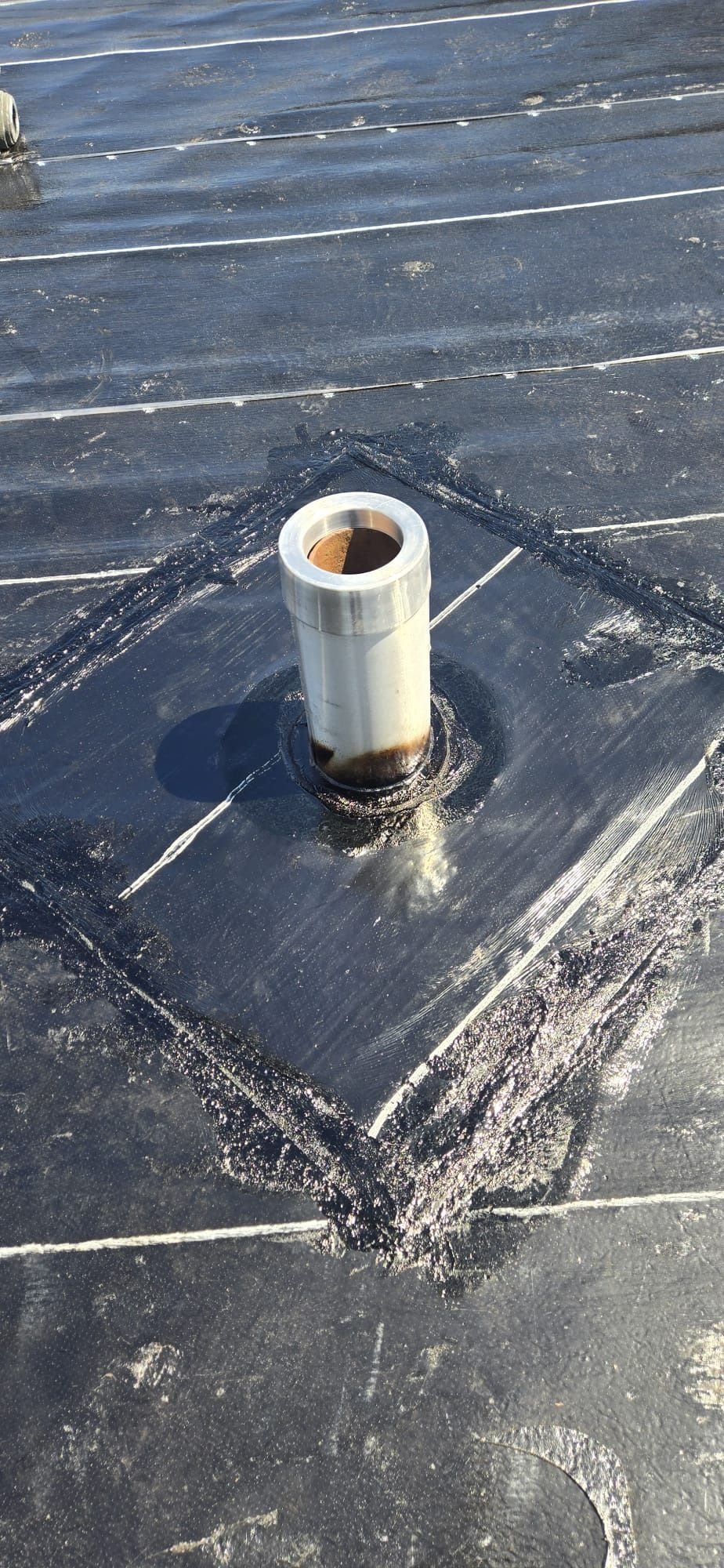
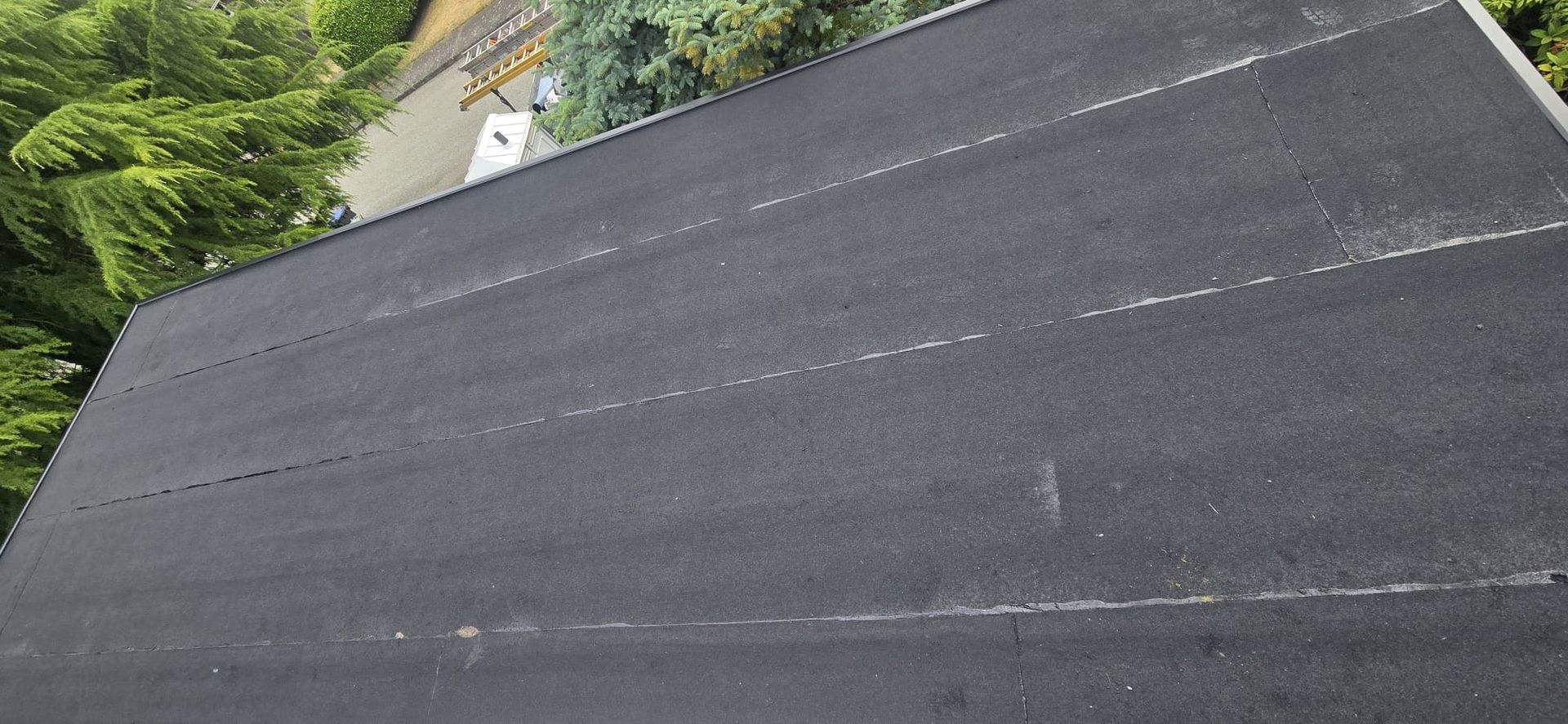
From the roof surface to its connections
Useful inspection photographs show both the wider roof area and the detail that needs attention. Keep the roof section and location consistent so the next visit can find the same point.
A DEFINED MAINTENANCE VISIT
Know what will be checked and recorded
Build the visit around the actual roof, its manufacturer guidance, exposure, debris and repair history. Agree on the inspection interval and additional checks after major weather events, reported damage or work by other rooftop trades.
The table is a scope to discuss when booking. Confirm which tasks and photographs are included, what access is needed and what will require a separate repair authorization.
| Area | Inspection focus | Useful record |
|---|---|---|
| Drains, scuppers and gutters | Accessible debris, outlet condition and visible drainage connections. | Locations checked, cleaning completed and any unresolved restriction. |
| Membrane and seams | Punctures, open laps, movement and deterioration. | A location and photograph for each defect, with a proposed next step. |
| Walls, parapets and curbs | Flashings, terminations and transitions between materials. | The component involved and whether connected work needs another trade. |
| Pipes and rooftop equipment | Roofing connections, signs of damage and recent equipment work. | The affected detail and any access or coordination needed. |
| Standing water and previous repairs | Recurring ponding, prior patches and patterns in reported leaks. | Completed work separated from further investigation and repair recommendations. |
| Access and anchor records | Safe access arrangements and available permanent anchor documentation before work. | Any missing information or specialist review needed. Routine roof care does not certify anchors. |
Drain clearing and drainage correction are different jobs
Removing accessible debris may clear an obstruction. Recurring standing water can also involve roof slopes, outlet connections or concealed piping. Record where water remains and assess the cause before assuming cleaning or a surface patch will solve it. State where the roofing scope ends and whether plumbing or design work is needed.
MAKE THE REPORT USEFUL
Separate completed work from the next decision
Findings
Identify the building, roof section, reported concern and observed condition. Keep confirmed defects separate from possible causes that still need investigation.
Work completed
Record the repair or maintenance performed and its location. Note the limits of temporary protection and retain agreed photographs with the service record.
Outstanding action
List repair proposals, monitoring and specialist reviews separately. Give the property team a clear next step and approval decision.
For example, accessible debris removed from an outlet is completed maintenance. A damaged connection at that same outlet remains a separate repair item until it is addressed. A report should preserve that distinction.
PLAN AROUND THE PROPERTY
Access, occupants and connected work
For a warehouse in Newton or South Westminster, discuss loading routes, inventory protection and equipment access. For offices or retail space in Guildford, identify entrances, business hours and tenant notices. The address and operating requirements shape the work plan.
Before the visit
Provide roof plans if available, previous reports, warranty documents, access restrictions and the site contact. Identify who can authorize additional work and how changes will be priced and approved.
Discuss noise, odour, deliveries and any equipment that must remain available. If the scope expands into replacement, structural changes or street use, confirm the applicable approvals and who arranges them before scheduling.
Safe roof access
Share permanent anchor records and access information with the team. Permanent fall protection anchors and their installation require professional engineer certification. Fall protection equipment must be inspected by a qualified person before use on each shift.
A maintenance visit does not certify or recertify an anchor. Concerns about anchor condition or documentation need appropriate specialist review before it is relied on.
COMPARE THE WHOLE SERVICE
What affects the repair or maintenance quote?
The visible size of a defect is only part of the price. Investigation, safe access, preparation, compatible materials, the repair area and occupied site constraints all affect the scope. Concealed damage or uncertain conditions may need a separately approved investigation.
Ask for a clear work boundary
- Diagnosis, temporary work, permanent repair and scheduled maintenance identified separately.
- Roof areas, methods, preparation and disposal included in the price.
- Any exclusions for interior restoration, equipment servicing, concealed piping or structural work.
- The process for documenting and approving additional work.
Keep the coverage in writing
Ask what product or workmanship coverage applies to the specific repair, including its terms and exclusions. A local repair does not renew the condition or warranty of the entire roof.
Keep the proposal, invoice, photographs and applicable warranty documents together. Where existing manufacturer coverage remains in place, check its reporting and repair requirements before authorizing work.
PROPERTY MANAGER QUESTIONS
Commercial roof repair and maintenance FAQs
Can you help with an active commercial roof leak?
Call with the address, affected area and urgency so availability and safe next steps can be discussed. The visit may involve investigation, temporary protection where practical, or a defined repair after the source and surrounding condition are assessed.
How often should our commercial roof be inspected?
Use the roof system guidance, site exposure, debris and repair history to agree on a schedule. Include additional checks after major weather events, reported damage or other rooftop work. Put the interval and scope in writing.
Does maintenance include every roof repair?
No. Confirm the inspection, routine tasks, any minor repair allowance and work that needs a separate quote. A defined maintenance scope helps your property team distinguish completed care from outstanding repairs.
How is repair or maintenance work documented?
Agree on the report and photographs when booking. Ask for the building and roof section, findings, work completed, outstanding recommendations and any limitations to be identified so the record remains useful for later visits.
Can a coating solve a leaking commercial roof?
A coating is not a universal repair. The substrate, moisture condition, preparation, compatibility and defects need assessment. Any proposed coating should have a defined purpose and scope, with underlying defects addressed as required.
Will clearing a drain solve standing water?
It may resolve an obstruction, but recurring ponding can involve the roof geometry, outlet connection or concealed piping. Cleaning and drainage corrections are different scopes. Record the location and have the cause assessed.
Can work be scheduled around tenants and business hours?
Discuss those requirements before the scope is finalized. Access, occupant notices, the proposed method, weather and safe working conditions determine what is practical for the site.
When is replacement worth considering?
Recurring defects, widespread deterioration or an inability to connect a repair to sound material may justify a wider roof assessment. Ask for the findings and repair limitations behind the recommendation before comparing replacement options.
A CLEAR NEXT STEP
Tell us what your Surrey roof needs
Send the building address, current concern and available roof history. We can discuss the assessment, repair or maintenance scope and the records your property team needs.
For an active leak, call 604 358 3436 to discuss availability.
CONTINUE PLANNING
Related commercial roofing services
Surrey building projects
Commercial roofing in Surrey
Commercial roof installation and replacement
Care across your portfolio
Commercial repair and maintenance across the region
Contact Paragon Roofing BC

Check our BBB profile
View the business details on Paragon Roofing BC’s BBB profile.
