A roof repair should address the water entry point and the surrounding materials. Flashings, vents, valleys, skylights and damaged coverings are useful places to investigate. A ceiling stain alone cannot tell you which part has failed.
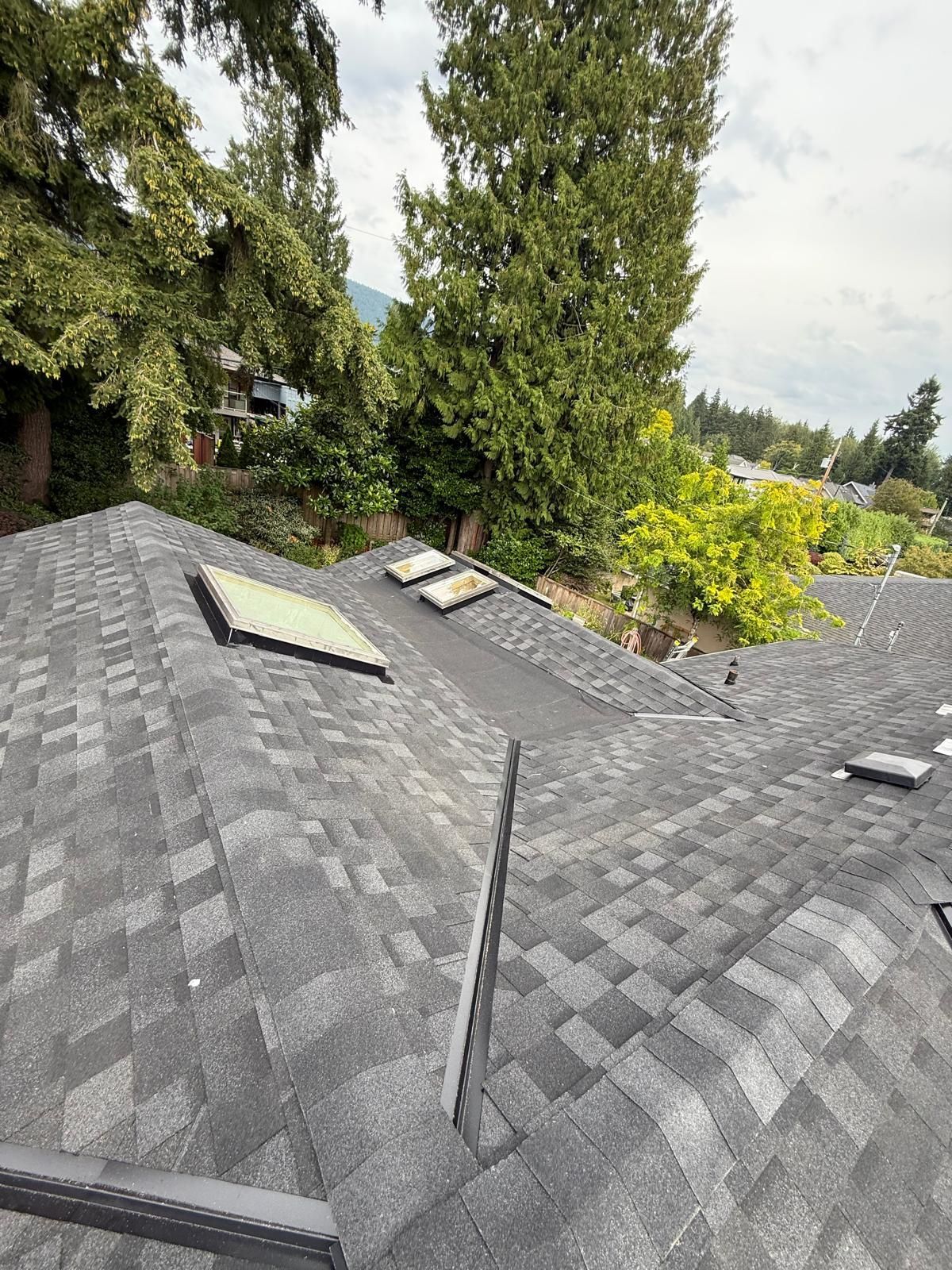
A valley, skylights and roof penetrations on adjoining roof planes.
By Harman Singh, Paragon Roofing BC · Updated October 24, 2026
IF WATER IS COMING IN NOW
Start with safety and a clear description
From inside or the ground
Keep clear of sagging ceilings, wet electrical fittings and damaged areas. Move belongings only where it is safe. Record the room, when the leak started and whether it changes with rain or wind. Take photos from a safe position; do not climb onto a wet or damaged roof.
Call to discuss the next step
Tell us the address, roof type, active symptoms and access restrictions. Confirm availability and any assessment charge. Temporary protection may be appropriate, subject to safe access and weather. It is a separate decision from the permanent repair.
For an immediate danger to people, leave the affected area and contact emergency services. A roofing enquiry form is not an emergency dispatch service.
SYMPTOMS ARE CLUES
Where a roof repair may begin
These details help explain a proposal. They are not a diagnosis from the ground. Water can travel before it becomes visible indoors, and more than one defect may be involved.
On a small screen, scroll sideways to compare every column.
Area to inspect
Possible clues
What a repair may involve
Chimney and wall flashing
Staining near a junction, loose metal or open connections.
Open the adjacent covering as needed, repair the flashing assembly and integrate it with the wall or chimney. Sealant alone cannot replace missing flashing.
Pipe boots and vents
Cracked seals, displaced parts or staining below a penetration.
Replace the failed component with a compatible detail and check the surrounding covering, underlayment and deck.
Valleys and drainage paths
Debris, damaged lining or leaks near intersecting slopes.
Clear the drainage route safely, assess the lining and adjacent roofing, and repair the affected assembly.
Shingles and ridge caps
Missing, torn or lifted roofing after wind or impact.
Check the affected area and nearby fastening and sealing. A repair depends on the condition of the surrounding shingles.
Cedar shakes
Split, missing or displaced pieces.
Assess adjacent shakes, fastening and the layers beneath. Isolated defects and widespread deterioration need different scopes.
Skylights
Moisture around the opening, glass or interior shaft.
Distinguish flashing and roof defects from unit problems or condensation before choosing reflashing, component work or replacement.
Metal and low slope roofs
Open seams, damaged flashing, corrosion or blocked drainage.
Identify the actual system and compatible repair method. Do not assume one coating, sealant or patch suits every roof.
LOOK AT HOW MATERIALS MEET
The junction matters as much as the covering
Flashing connects the brick chimney to the surrounding shingles.Membrane, wall sheathing and shingles meet at a roof transition.
On shingle roofs, step flashing works with successive courses at a side wall. Chimney counterflashing protects the upper connection. The repair needs to restore the water shedding arrangement, including concealed layers where they are affected.
PREPARE FOR AN ASSESSMENT
Tell us what you have noticed
Share the property address, roof material, leak history and any earlier repairs. Mention difficult driveway access, height, steep slopes or an occupied strata building so the visit can be planned.
West Vancouver roof repair enquiry
Thank you for contacting us. We will get back to you as soon as possible.
Oops, there was an error sending your message. Please try again later.
FROM SYMPTOM TO SCOPE
A useful assessment follows the water
Record the pattern
When does water appear? Which room is affected? Does it happen only in wind driven rain? Earlier photos and invoices help distinguish a recurring defect from a new one.
Inspect the relevant assembly
The roofer checks the accessible covering, flashings, penetrations and drainage. The assessment should state what could not be inspected and whether opening materials or further investigation is needed.
Separate possible causes
Water near a window or wall is not automatically a roof leak. Roofing connections, wall or window details, plumbing and condensation may need different investigations or trades.
Define the repair boundary
Agree what will be removed and replaced, how surrounding materials will be tied in, and what happens if concealed damage is found. Clarify any temporary measure and its limitations.
WEST VANCOUVER CONDITIONS
Assess the exposure at your property
Wind driven rain, nearby trees, roof geometry and drainage can influence where a defect appears. Near the shoreline, the condition and compatibility of exposed metal deserve attention. A sheltered roof and an exposed slope can need different repair details.
From Ambleside and Dundarave to British Properties, Caulfeild and Horseshoe Bay, tell us about access, trees and the affected roof face. The address alone does not establish the cause of a leak, the repair price or how long a component will last.
After a storm
Record visible changes from a safe position, including missing roofing or displaced flashing. Keep dates, photos and repair documents. If making an insurance claim, confirm the insurer’s documentation requirements; a roofing assessment does not determine coverage.
CONDITION BEFORE A RULE OF THUMB
Repair or replace?
A targeted repair may fit
The defect is localized, adjacent materials remain serviceable, and the proposed work can restore a reliable connection without repeatedly disturbing a failing roof.
Compare a wider scope when
Leaks recur in different places, deterioration is widespread, the deck needs substantial attention, or a local repair cannot address the underlying assembly.
A single leak does not automatically justify a new roof. Neither does a fixed repair count or percentage of replacement cost. Ask for photographs and an explanation of what a repair would solve, what would remain and why replacement is being considered.
A useful price follows an identified scope. Ask whether the assessment, temporary protection and permanent repair are separate charges, and compare proposals for the same work.
On a small screen, scroll sideways to compare every column.
Scope factor
What to clarify
Access, height and slope
How the work area will be reached, protected and supplied, including any special access equipment.
Roof material and detail
The compatible products, extent of removal and how new work connects to the existing roof.
Concealed conditions
Whether deck damage is known or provisional, and how added work will be photographed, priced and approved.
Extent of the problem
A single failed component, several separate defects and a broader assembly problem are different jobs.
Weather and temporary protection
The conditions needed to complete the work and any interim protection included in the proposal.
Related work and approvals
Interior repairs, other trades, disposal, municipal requirements and exclusions.
UNDERSTAND WHAT IS BEING OPENED
Visible details and concealed layers
Exposed framing and plywood during roofing work. The covering can conceal conditions beneath it.A valley and skylights bring several water management details together.
Ask the proposal to distinguish confirmed findings from assumptions. Opening a roof can reveal additional work; agree on a clear approval process before it begins.
BEFORE WORK STARTS
Get the plan in writing
The defect being addressed and the roof areas included.
Removal, materials, flashing connections and any deck repairs.
Access, property protection, cleanup and waste removal.
Exclusions, additional work approval and weather allowances.
Completion photographs and applicable product and workmanship warranty terms.
Paragon’s own roofing crews carry out the roofing work, with owner involvement. Confirm any separate trade responsibilities and the specific commitments in your proposal.
Check permits for the actual repair
Confirm requirements with the District of West Vancouver before work begins. Its building bylaw covers repairs and does not list roofing as a general exemption. Describe structural work or changes to the assembly and record who is responsible for any required approvals.
After the repair
Keep the repair record and report any recurring symptoms. Plan maintenance around your actual roof and drainage, using the West Vancouver roof maintenance guide
for further reading. For a cedar roof, the West Vancouver cedar guide
covers the broader material discussion.
BEFORE YOU BOOK
West Vancouver roof repair questions
What should I do when my roof starts leaking?
Keep people away from wet electrical fixtures, sagging ceilings and damaged areas. If it is safe, move belongings away from the water and record what you can see from indoors or the ground. Call Paragon to describe the situation and confirm current availability. Roof access and temporary protection depend on the weather, the damage and safe access.
What affects the cost of roof repair in West Vancouver?
The defect, roof material, height and slope, access, concealed damage and extent of removal all affect the scope. Temporary protection and permanent work may be separate items. Compare written proposals for the same work and ask how any additional repairs will be documented and approved.
Does a chimney or skylight leak mean the whole roof needs replacing?
No. A localized flashing or component defect may be repairable when the surrounding roof can support the work. Wider deterioration, repeated leaks in different areas or damaged decking can change that decision. The assessment should explain the evidence and any concealed areas that remain uncertain.
Can you help with an urgent leak in West Vancouver?
Call 604 358 3436 and describe the active leak, property address and any access hazards. Confirm current availability and the proposed assessment or temporary protection. A permanent repair is planned after the cause, roof condition, access and weather requirements are understood.
Do I need a permit for a roof repair?
Confirm the specific scope with the District of West Vancouver before work begins. Its building bylaw covers repairs and does not list roofing as a general exemption. Describe any structural work, changes to the roof assembly or related alterations, and record who will obtain any required approvals. Do not assume an urgent leak makes permanent work exempt.
How can I reduce repeat roof problems?
Keep repair records and arrange maintenance that suits the roof material, surrounding trees and drainage. Ask for an assessment after visible damage or a new leak. A recurring stain should be investigated before another surface patch is applied; it may involve a different entry point or an unresolved detail.
YOUR NEXT STEP
Discuss the repair your roof needs
Send your location, symptoms and repair history. We can discuss the next assessment step and current availability. For active water entry, call to explain the situation.