Commercial roofing services
Commercial Roof Repairs and Maintenance
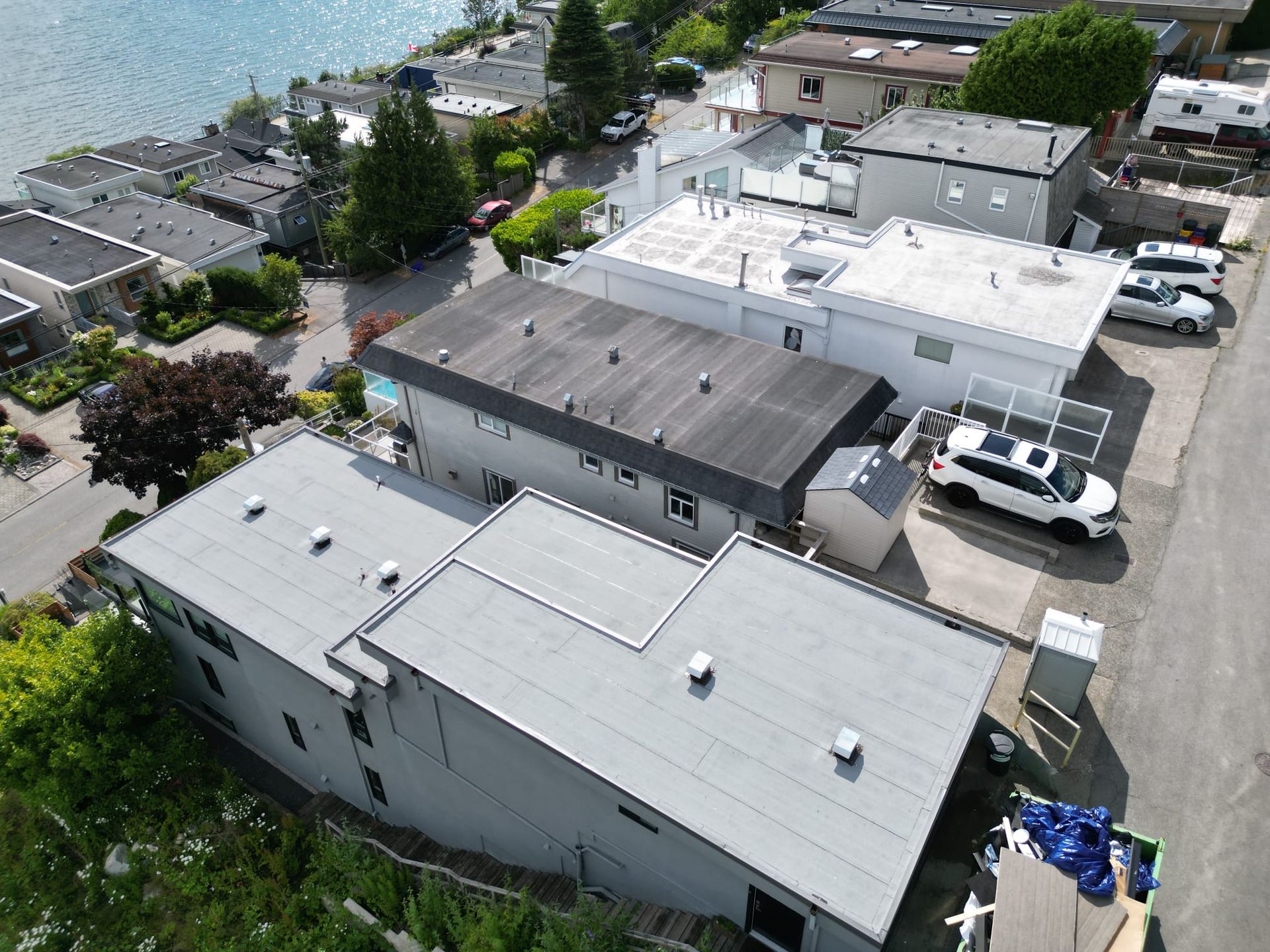
Understand what is leaking, what can be repaired and what your building needs next. Paragon Roofing BC assesses commercial roof concerns and prepares repair or maintenance scopes for buildings across Metro Vancouver and the Fraser Valley. Tell us about the leak, the roof system and the way the property operates so the next steps can be planned around both the roof and the people below it.
Protecting your roof. Supporting your business.
On this page
Start with the leak history and the building
Tell us when the water appeared, whether it followed rain, where it is visible indoors and whether there has been previous repair work. Photographs of the affected area, a roof plan and maintenance records can be useful. A mark on an interior ceiling is a starting point for investigation, not a reliable map of the opening on the roof above.
We also need to understand access. Let us know who can authorize entry, whether there is an occupied tenant space below, how rooftop equipment is serviced and whether the roof has restricted areas. An office, warehouse, retail unit and strata commercial building may need different coordination even when the roofing material looks similar.
During an active leak, keep people away from unsafe wet areas and electrical hazards. Do not send staff onto a wet roof to search for the source. Tell us about the urgency when you contact us so access and the appropriate response can be discussed; we can confirm availability for your property.
Separate an assessment from the repair itself
A useful assessment identifies observed defects, explains what remains uncertain and describes the proposed next action. Some areas may need closer inspection or an agreed investigative opening before the full scope can be confirmed. Roof surface observations alone do not prove the condition of concealed insulation or decking.
When a defect is suitable for a targeted repair, the proposal should describe the affected location and the repair boundary. Where several possible sources exist, the scope should explain the investigation rather than representing the first visible issue as a guaranteed diagnosis.
Temporary protection and permanent repair are different services. A temporary measure may reduce immediate exposure while materials, access or weather are arranged, but it should not be recorded as completion of a larger permanent repair. The job record should make that distinction clear.
How a commercial roof repair is planned and completed
The useful outcome is a defined repair and a record of what was addressed. The sequence below explains the decisions to expect in a property specific scope.
-
1. Gather the leak history
Identify the affected space, when water appears, previous work and any recent rooftop activity. Mark the area on a plan where possible so the same location can be tracked during follow up.
-
2. Assess the roof and adjoining details
Review the membrane, accessible seams, flashings, drainage and nearby penetrations. A leak near equipment may involve the roofing, equipment itself or another assembly. Agree on any investigation needed to separate those possibilities.
-
3. Define temporary and permanent work
If immediate protection is appropriate, identify its purpose and limits. Set out the permanent repair area, proposed materials, access needs and work that requires further approval.
-
4. Prepare the repair area
Preparation follows the selected repair system. Cleaning, drying, removal of loose material and compatible primers can affect the bond. Existing coatings and previous patches must be considered before another material is applied.
-
5. Resolve affected underlying components
Where investigation identifies wet or damaged material within the repair area, define what needs removal and replacement. Agree on how concealed conditions will be documented and authorized before extending the work.
-
6. Install and check the detail
Complete the specified membrane and flashing connections and check the finished seams or bonds by the appropriate method. The connection to sound existing roofing matters as much as the centre of the patch.
-
7. Close out with useful records
Ask for the repair location, photographs, materials used, limitations and any follow up recommendations. Keep the record with the roof plan so future maintenance and equipment work can account for what was changed.
Repairs matched to the existing roof system
A roof membrane is the waterproof covering. Commercial roofs can include modified bitumen membranes made from reinforced asphalt, other membrane systems, metal areas and mixed transitions. The material needs to be identified before a repair method is selected. Products that look similar are not automatically compatible, and a sealant suitable for one detail may be unsuitable for another.
A targeted scope may address a damaged membrane area, an open detail, deteriorated flashing or a problem around a roof penetration. The proposed method must account for the existing surface, its condition and the manufacturer's applicable instructions. This is not a recommendation to coat an entire roof whenever a leak appears.
Flashings are the waterproof connections at roof edges, walls and openings. Equipment supports, access hatches, walls and roof edges deserve particular attention because the roof covering changes direction or meets another assembly there. Where an issue involves mechanical equipment, structural support or work outside the roofing scope, that responsibility should be identified rather than hidden inside a general repair description.
| Existing roof | What the repair needs to address | What to confirm |
|---|---|---|
| SBS modified bitumen | Compatible membrane and flashing details, prepared laps and sound supporting layers. Depending on the specified system, installation may use heat welding, cold adhesive or self adhering products. | The attachment method, preparation of the existing surface and precautions around combustible or concealed areas. |
| TPO or PVC membrane | Identify the actual membrane. Compatible patches may use hot air welded seams or an approved repair product with its specified preparation. | TPO and PVC are different materials. Confirm compatibility, surface cleaning and how seam quality will be checked. |
| EPDM rubber membrane | Approved rubber repair materials, seam preparation and the specified primer or adhesive. Pressure sensitive repair strips can require a matching primer. | The membrane condition, manufacturer requirements and treatment of patch edges and adjoining flashings. |
| Metal roof areas | Identify whether water entry involves a seam, fastener, flashing, penetration or adjoining wall. | The panel profile, existing coating, movement at the detail and whether a localized repair can address the cause. |
On a small screen, scroll the table sideways to read every column.
See the details that need attention
Our roofing photo collection shows why an assessment looks beyond the open roof surface. Seams, changes in height and roof openings each need a detail suited to the existing assembly.
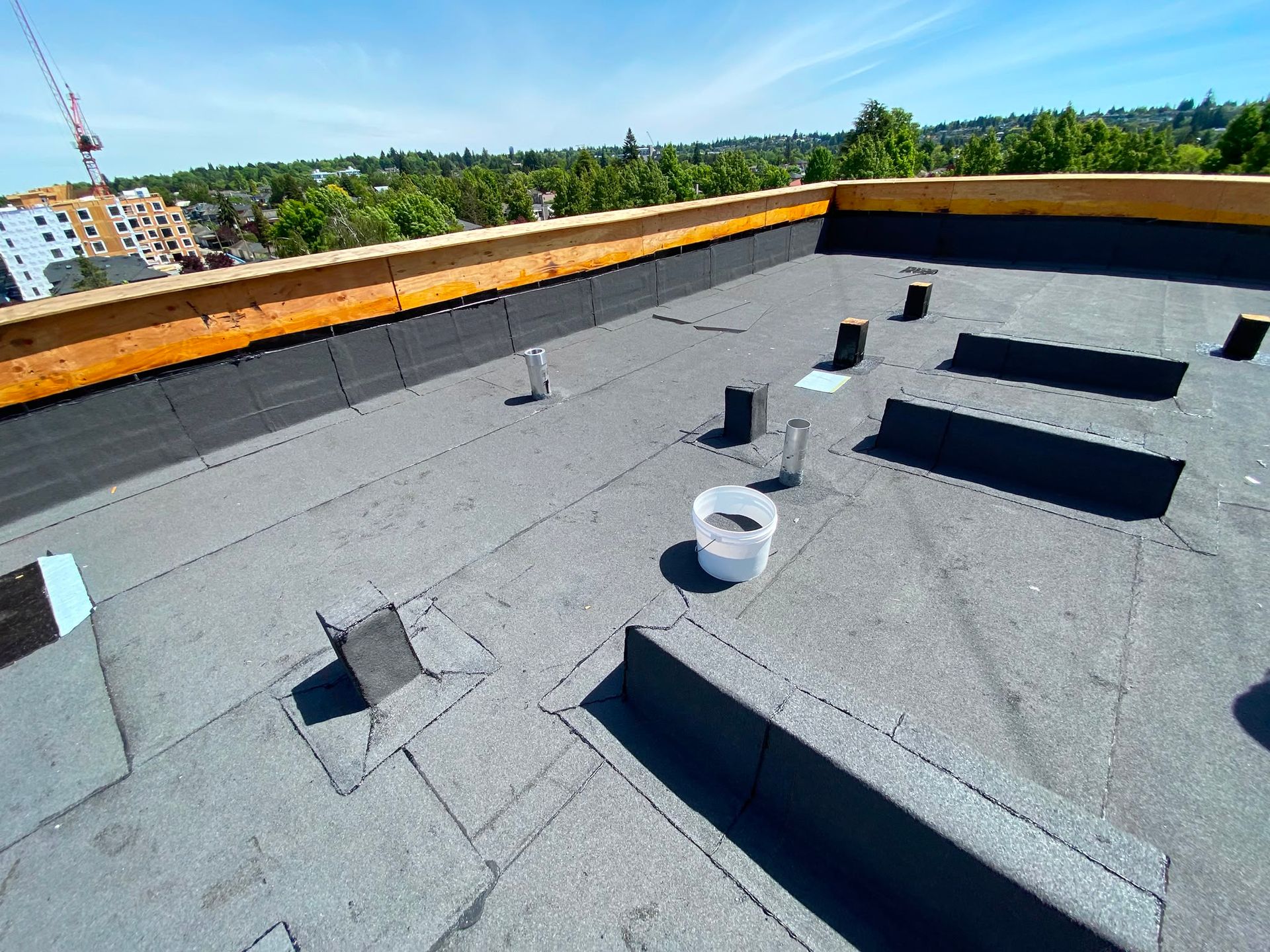
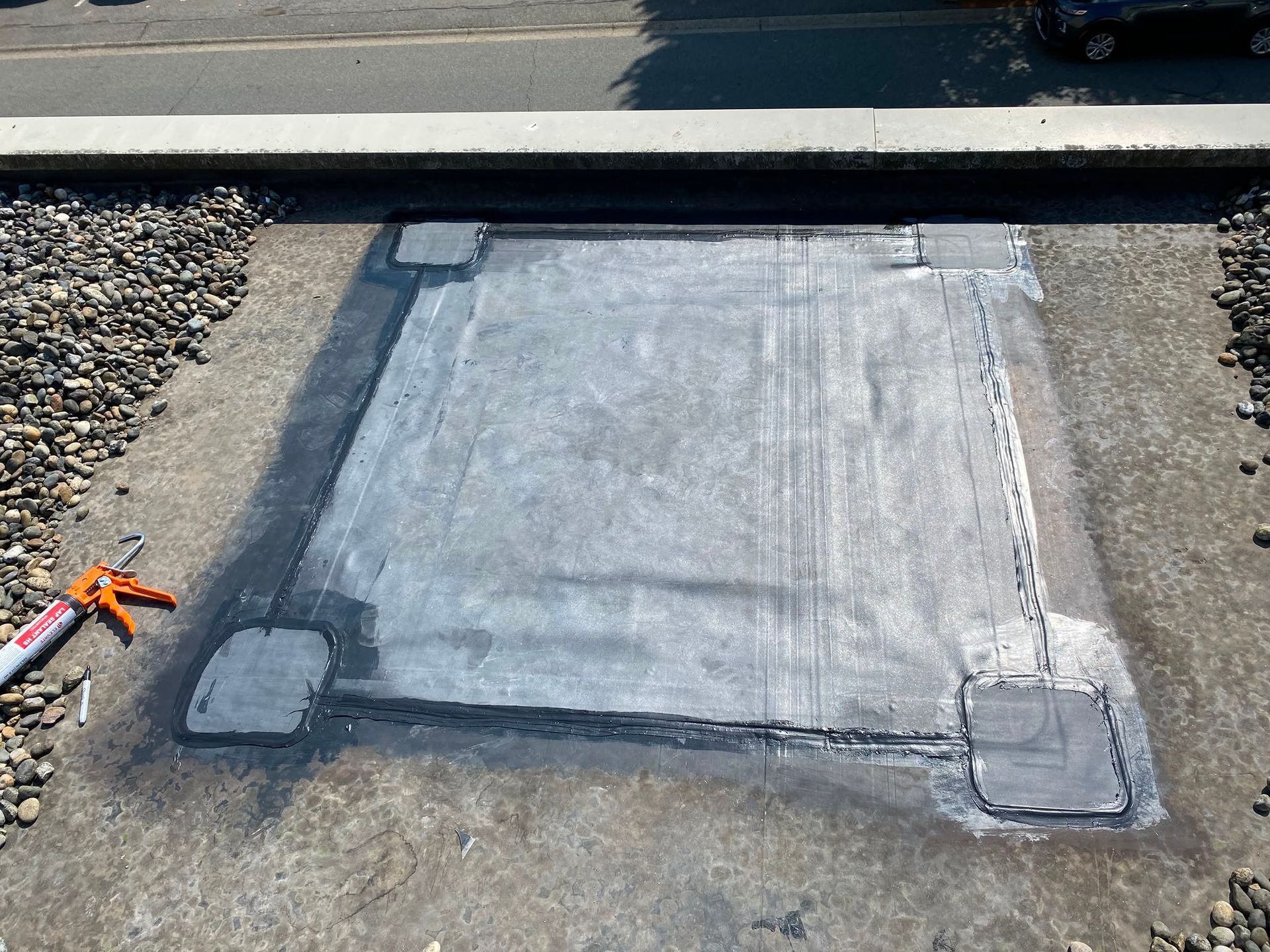
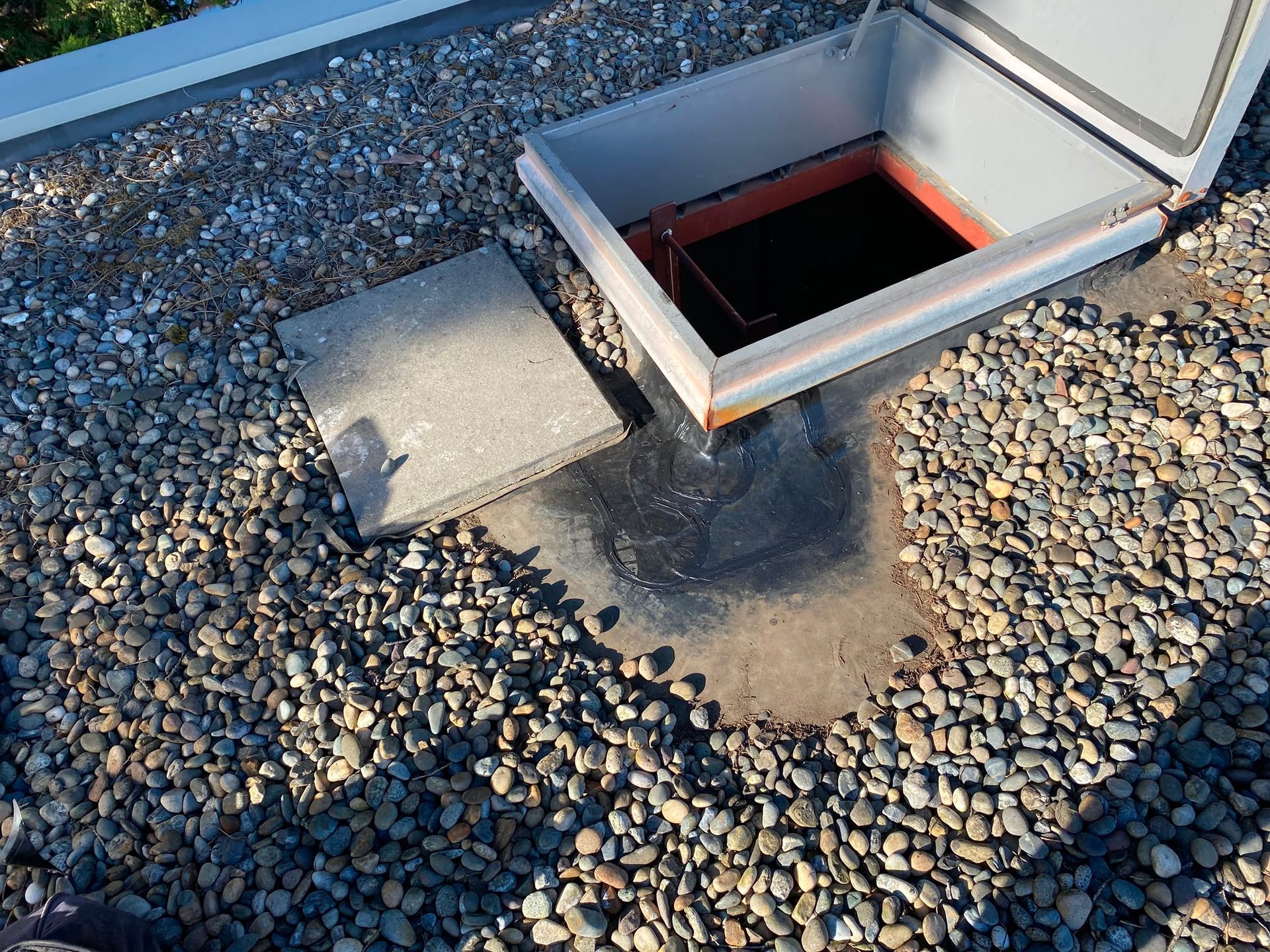
These images illustrate visible roof details. The photographs alone do not establish product specifications or completion status.
Drainage is part of the assessment
Debris, obstructed drainage points and damaged roof details can affect how water leaves the roof. Maintenance can include review and appropriate clearing of accessible roof drainage components within the agreed scope. A photograph of standing water should prompt assessment, not an automatic promise that cleaning a drain will solve the whole problem.
A blocked outlet and an inadequate roof slope are different conditions. Drainage changes, tapered insulation, overflow arrangements or alterations to plumbing may require design or work beyond a routine maintenance visit. Ask for that boundary to be stated clearly.
Keep roof drainage observations with the maintenance record. The location, weather context and what was found are more useful than a simple notation saying that the roof was checked. Access limitations should be recorded as well.
What a maintenance visit can cover
A maintenance scope can include review of the exposed roof surface, accessible seams and flashings, roof edges, penetrations and drainage areas. It should also describe any cleaning or minor repairs included in the agreed visit and which findings require separate approval.
Inspection timing should respond to the roof, the site and applicable manufacturer requirements. A calendar can provide a useful starting point, but a tree covered property, a roof used frequently by equipment contractors and a relatively open roof may need different attention.
A useful schedule allows time to review findings and arrange approved work. Agree on inspection timing for your roof and any manufacturer warranty requirements, with additional attention after significant weather or rooftop alterations.
Photographs, a list of work completed and a record of recommended follow up make the visit useful for an owner or property manager who did not walk the roof. Ask what reporting is included in the specific proposal.
What should be recorded after a maintenance visit?
| Area | What to review | Useful record |
|---|---|---|
| Roof surface and seams | Visible punctures, splits, open laps, displaced surfacing and changes around previous repairs. | Marked locations, photos and a distinction between observed damage and areas needing investigation. |
| Drains, scuppers and gutters | Debris at accessible outlets, condition of the waterproof connection and signs of restricted flow. A scupper is an outlet through the roof edge or parapet. | What was cleared, what remains restricted and whether plumbing or drainage design work is needed. |
| Flashings and penetrations | Wall upstands, parapet edges, equipment curbs, pipes, hatches and exposed sealant details. | Condition of each accessible detail and any limitations caused by equipment or inaccessible areas. |
| Roof access and other trades | Foot traffic routes, equipment servicing, loose materials and damage near work areas. | Dates and locations of rooftop work, with protection or access changes recommended. |
| Follow up priorities | Separate urgent defects, planned repairs and items to monitor. | Responsible contact, approval needed and the next agreed review date. |
On a small screen, scroll the table sideways to read every column.
Make the plan useful between visits. Keep an access log, note significant weather events and report new leaks promptly. If equipment contractors will work on the roof, discuss protection of their travel and work areas in advance. Planned visits do not replace reporting a newly observed problem.
Decide between repair, restoration and replacement
A localized repair may be reasonable when the defect is limited and the surrounding assembly can support a durable repair. Repeated problems, widespread deterioration or uncertain concealed moisture may call for a broader assessment before more money is committed to patching.
Restoration or coating is not a universal middle option. Suitability depends on the existing system, substrate condition, drainage, compatibility and the proposed manufacturer's requirements. A roof should not be described as a coating candidate from a photograph alone.
Replacement planning should distinguish urgent work from a longer term capital decision. Where continued repair is unlikely to be a responsible recommendation, we can explain the concerns and discuss a separate replacement scope. A full commercial roof replacement needs its own assessment, scope and specifications.
Compare the options before committing to more repairs
| Option | When it may fit | Key question |
|---|---|---|
| Targeted repair | A limited defect with surrounding material suitable for a sound connection. | Can the cause and repair boundary be identified with reasonable confidence? |
| Planned maintenance | A serviceable roof needing inspections, clearing and scheduled minor work. | What is included, what triggers an extra visit and how are new defects approved? |
| Restoration or coating assessment | A roof that meets the proposed system’s requirements after necessary repairs and preparation. | Have moisture condition, adhesion, drainage and existing materials been assessed? |
| Replacement planning | Broader deterioration, recurring failures or affected components that make continued patching difficult to justify. | Which work is urgent and what belongs in a separate capital project? |
On a small screen, scroll the table sideways to read every column.
A coating does not remove wet insulation. For example, a proposed coating over an asphaltic roof may require moisture investigation, replacement of wet materials, adhesion checks and repairs to seams and flashings before coating begins. The actual preparation follows the chosen system. Ask to see those items in the scope rather than treating coating as a substitute for diagnosis.
Plan around tenants and building operations
Share any limits on working hours, deliveries, noise, odour, parking and tenant access before the scope is finalized. Identify sensitive areas below the roof, such as inventory, electrical equipment or spaces that cannot be interrupted without notice.
Roofing access and rooftop mechanical work also need coordination. Tell us about scheduled service visits, new equipment installations or alterations that could affect the same roof area. The aim is to avoid completing a repair that another planned activity will immediately disturb.
Where work involves hot application, roof openings or other site specific hazards, the method and safety arrangements belong in the job planning. Occupant communication, temporary protection and responsibilities between trades should be discussed rather than assumed.
What your Paragon repair proposal should explain
Our own roofing crew carries out Paragon's roofing work, with owner involvement and oversight. You have direct accountability for the installation and a detailed written proposal that explains what you are purchasing.
Our detailed proposals identify the roof area, observed issue, proposed repair method, access arrangements and exclusions. The scope should explain whether investigative work, concealed damage, drainage modifications or work by other trades are included, allowed for or separately priced.
Repair costs depend on the problem, the system, access, affected area and what is found during assessment. A price from another building or a retail material listing does not establish the cost of repairing your roof. Your proposal sets out the repair scope and price for the property being assessed.
Ask how changes will be authorized and what completion records will be provided. Where warranty coverage is offered, review its written scope and limits for the actual repair. A repair warranty should not imply coverage for unrelated areas of an older roof.
A clearer way to compare repair quotations
| Cost factor | What to ask |
|---|---|
| Access and mobilization | Does the price allow for roof access, parking, loading restrictions and protection of occupied areas? |
| Repair area and method | Which defects and locations are included? Is the price for temporary protection, investigation or permanent repair? |
| Concealed conditions | How will additional wet insulation, deck damage or other hidden work be priced and authorized? |
| Drainage and other trades | Are outlet clearing, plumbing, equipment disconnection or structural work included or excluded? |
| Weather and operations | What conditions can delay the work? How will tenant notices, noise, odour and any equipment interruptions be coordinated? |
| Completion and warranty | What photographs and written records are included? What area and work does any offered warranty actually cover? |
On a small screen, scroll the table sideways to read every column.
Questions about commercial roof repairs
Can a leaking commercial roof be repaired without full replacement?
Sometimes. A limited defect may be repairable where the surrounding roof remains suitable. The decision needs an assessment of the actual system and condition, not just the age of the roof or the position of a ceiling stain.
Does maintenance include every repair found during the visit?
Not automatically. The agreed maintenance scope should identify included cleaning or minor work and the approval process for additional repairs. Larger defects, concealed damage and design changes may need a separate proposal.
Can you repair around rooftop mechanical equipment?
We can assess the roofing and flashing involved. Equipment disconnection, support changes, electrical work and other trade responsibilities need to be coordinated separately where required. Share equipment records and scheduled service work when available.
Will a roof coating solve a leak?
A coating is appropriate only where the existing roof and proposed system are suitable. Compatibility, moisture, surface condition, drainage and details all matter. A leak first needs assessment rather than an automatic coating recommendation.
What information helps with a commercial leak enquiry?
Send the property address, your contact and access authority, the time and location of water entry, known roof material and any previous repairs. Interior photographs and existing roof plans help when they can be obtained safely.
Can work be arranged around tenant access?
Tell us about operating hours, entrances, deliveries and sensitive spaces before the work is planned. The agreed schedule and protection measures need to reflect the site. Do not assume an occupied building can remain unaffected by every type of roof work.
How often should a commercial roof be inspected?
Use a schedule appropriate to the roof system, exposure, equipment activity and manufacturer requirements. Additional review may be appropriate after significant weather or work on the roof. The maintenance plan should record the agreed frequency.
Does a roof inspection confirm that the insulation is dry?
A surface inspection alone does not establish concealed moisture condition throughout the roof. Where moisture or deck deterioration is suspected, an agreed investigation may be needed. Its method and limitations should be explained before work proceeds.
Tell us what is happening at your building
Include the property address, the affected space, when the leak occurs and any access restrictions. We can discuss the assessment and the information needed for a practical repair or maintenance scope.